Edge-Cloud Architecture for Industrial IoT Telemetry: Data Synchronization Patterns
An in-depth analysis of hybrid edge-cloud architectures in industrial telemetry, store-and-forward synchronization patterns, MQTT and WebSocket protocol efficiency, and network latency mitigation.
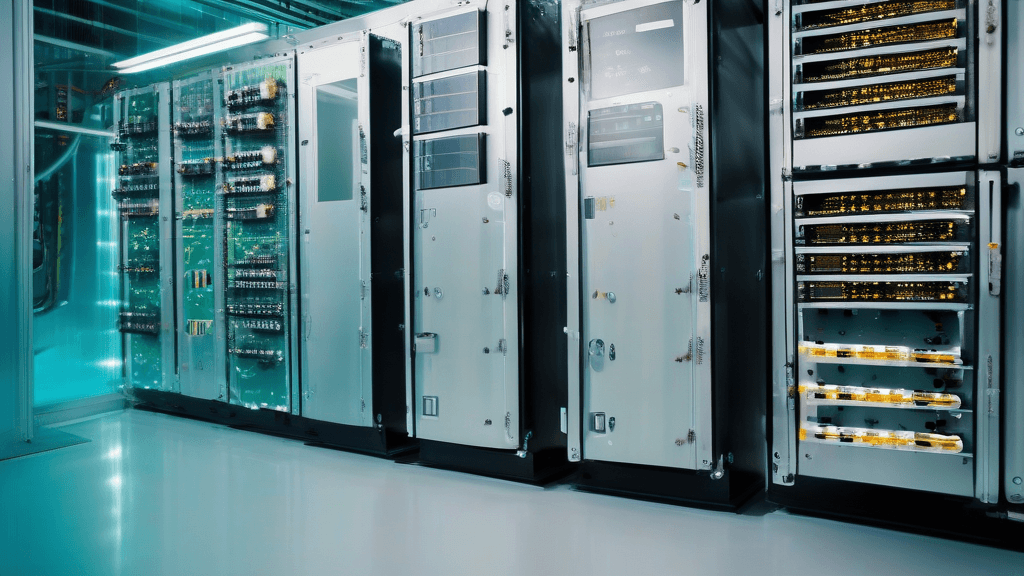
Modern industrial telemetry architecture integrates real-time edge node processing with centralized cloud analytics using asynchronous synchronization mechanisms and mutual TLS encryption. This design maintains operational continuity during WAN connectivity disruptions, securing data transmission across distributed environments without relying on continuous upstream availability.
Anatomy of Modern Industrial Telemetry Architecture Dilemmas
Pure cloud-centric computing approaches often hit a dead end when faced with the operational realities of factory floors, power generation facilities, and urban infrastructure networks. Full reliance on Wide Area Network (WAN) connectivity not only triggers latency fluctuations that disrupt automation processes, but also introduces a single point of failure that compromises production continuity. In real-world implementations, system architects are tasked with designing hybrid topologies capable of balancing analytical loads between edge nodes and centralized data centers.
The direct consequence of this distributed architecture is the shift in the role of local gateways in the field. Edge nodes are no longer treated as passive intermediaries that merely forward raw bit streams, but rather as autonomous subsystems that hold control over pre-processing, anomaly signal filtering, and sensitive data isolation before distribution to external networks.
Transport Protocol Mechanisms and Payload Standardization
The efficiency of an industrial telemetry channel is determined by the careful selection of the combination between transport layer protocols and data serialization formats. Given that most field instrumentation devices operate with limited computational and bandwidth constraints, modern engineering standards position MQTT as the protocol of choice thanks to its concise header overhead and support for Quality of Service (QoS levels 0, 1, and 2). This characteristic ensures that critical status messages maintain delivery guarantees even if the physical network topology experiences momentary degradation.
To unify heterogeneous data structures from hundreds of different sensor brands, the standardization of interoperable text formats is an absolute prerequisite as regulated in the IETF RFC 8259 specification. A neatly defined JSON payload structure enables downstream analytical engines to parse time attributes, device metadata, and metric values precisely without requiring rigid binary schema compilation.
Nevertheless, the need for interactive data visualization on supervisory consoles frequently requires simultaneous two-way communication channels. In such scenarios, the implementation of WebSockets based on the IETF RFC 8441 standard enables the opening of multiple streaming channels over a single connection, eliminating the repeated handshake initiation overhead that typically burdens conventional HTTP protocols.
As outlined in the edge computing vs centralized cloud latency analysis study, moving the evaluation point closer to the source of events is proven to significantly cut P95 and P99 latencies, while protecting public network pipes from bandwidth choking.
Edge-to-Cloud Telemetry Protocol Comparison Matrix
Communication protocol selection must be aligned with infrastructure constraints and operational workload profiles in the field:
| Evaluation Parameter | MQTT (Message Queuing Telemetry Transport) | WebSocket (Full-Duplex Streaming) | OPC UA (Open Platform Communications) |
|---|---|---|---|
| Header Overhead | Very Concise (Starting from 2 bytes) | Lightweight (2 to 14 bytes per frame) | Medium to Heavy (Full industrial metadata) |
| Communication Pattern | Asynchronous Publish / Subscribe via Broker | Persistent full-duplex point-to-point | Service-oriented Client / Server |
| Network Resilience | Very High (Supports persistent session & QoS) | Dependent on application reconnect logic | High (Equipped with session timeout & buffer) |
| Bandwidth Consumption | Highly Economical, ideal for cellular / satellite | Moderate, efficient for continuous streaming | Requires stable local network pipe |
| Recommended Scenario | Field sensor transmission & mass telemetry | Real-time web monitoring dashboards | Manufacturing machine integration & local SCADA systems |
Store-and-Forward Synchronization Patterns and Network Partition Mitigation
The most critical challenge in hybrid operations is maintaining data integrity when edge nodes experience a network partition. A proven robust approach in enterprise industries involves the store-and-forward pattern. Local gateways, such as those implemented in the AWS IoT Greengrass and Azure IoT Edge architectures, configure local file-based or lightweight memory database engines (such as SQLite or encrypted BadgerDB) to hold telemetry when outgoing routes go down.
When WAN connectivity recovers, the synchronization subsystem must not dump the entire queued data stack all at once due to the risk of triggering the thundering herd problem. Synchronization must be executed gradually using a rate limiting with exponential backoff algorithm. Data duplication resolution on the cloud side is resolved via UTC-based precision timestamps and deterministic message identities (idempotency UUIDs).
Data Transmission Security and IEC 62443 Standard Compliance
Hybrid architecture security is non-negotiable. Every telemetry data packet traversing public network perimeters must be fully encrypted using Transport Layer Security (TLS 1.3) equipped with a mutual authentication mechanism (mutual TLS / mTLS). The use of X.509 digital certificates on edge nodes ensures that the cloud server only receives data from hardware entities whose identities have been cryptographically validated.
Beyond transmission channel security, the integration of industrial automation cybersecurity standards such as IEC 62443 becomes a mandatory foundation in network zoning mapping (network segmentation). Through the implementation of strict isolation between the factory operational network (OT) and the office information technology network (IT), potential cyber intrusions from the outside can be localized without disrupting physical machine control operations.
Architectural Recommendations for Enterprise-Scale Deployment
For organizations designing or modernizing large-scale telemetry infrastructure, three main architectural guidelines should be followed:
- Decentralize Filtering Logic: Perform basic aggregation calculations, threshold detection, and data compression directly at the edge layer before data is sent to the cloud.
- Prioritize Idempotent Protocols: Design the data ingestion pipeline in the cloud to be capable of handling repeated message ingestion without duplicating operational analytical records.
- Standardize Node Containerization: Utilize lightweight container-based module runtimes on edge gateways to simplify the software update lifecycle (OTA updates) and centralized security patch management.
Frequently Asked Questions (FAQ)
Verified technical clarification for readers and search clarity.
AWS IoT Greengrass uses an edge-cloud architecture where edge devices act as proxies for AWS IoT Core. This approach enables direct local device-to-device communication without incurring cloud round-trip latency.
Topics & Related Industries:
More on Industry Research
Deep dives into system architectures, enterprise workloads, and modern benchmarks.

Zero Trust Implementation for the Protection of Digital Public Service Infrastructure
A security architecture study of digital public services based on Zero Trust Architecture, NIST identity management integration, and advanced transport encryption.

Evolution of Digital Entertainment Portals & Modern JKT88 System
Comprehensive analysis of digital entertainment portal evolution in the JKT88 ecosystem, highlighting system architecture and online user experience.
AI Agent Security in 2026: Identity Risks, Access Rights, and Automation
Explore AI agent security risks in 2026, ranging from identity and access rights abuse to prompt injection, malicious automation, and human oversight.