AI Data Center Expansion in Indonesia 2026: PUE Efficiency Standards, Green Energy Supply, and Network Resilience
A research-based analysis of the acceleration of AI data center development in Indonesia, PUE efficiency targets below 1.3, renewable energy integration, and data transmission infrastructure readiness.
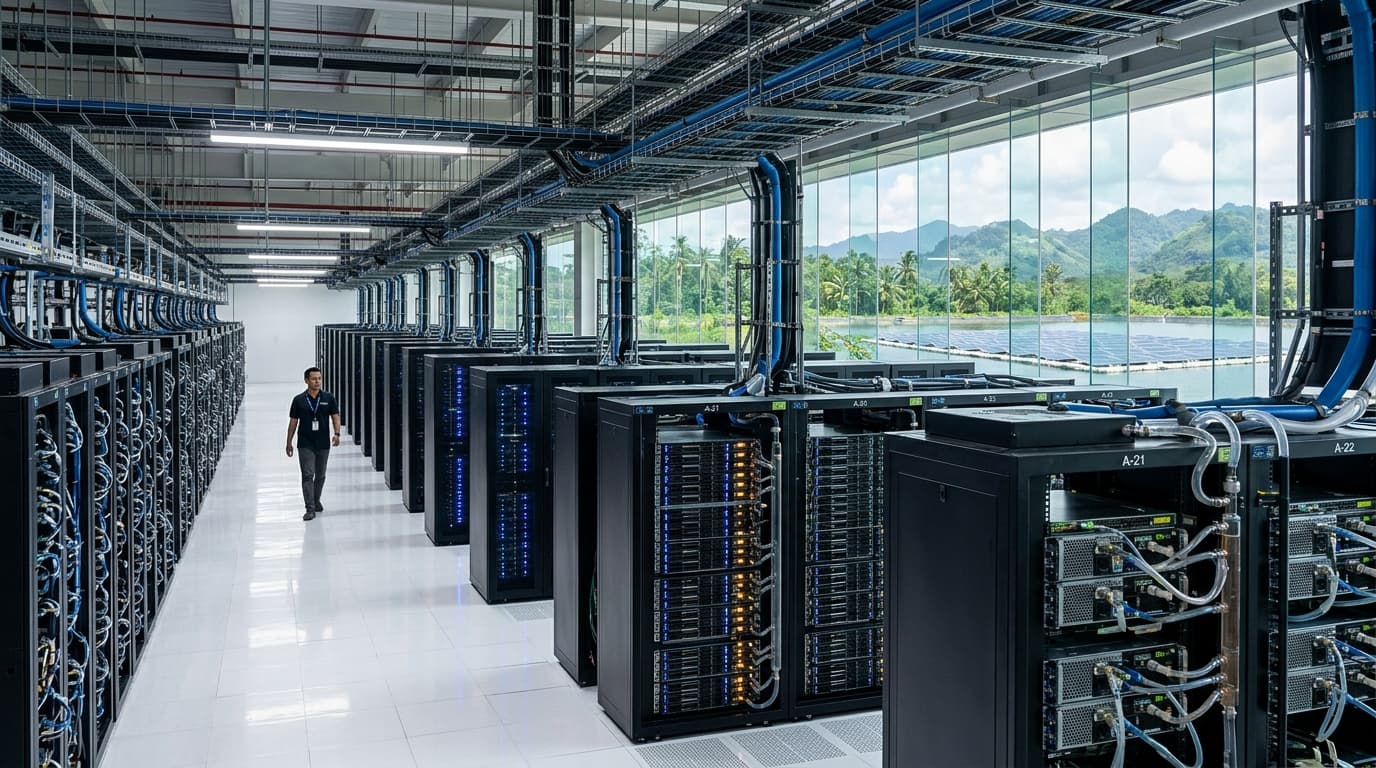
Indonesia's artificial intelligence data center expansion is projected to exceed 1.5 gigawatts by 2026 across Batam, Cikarang, and Nusantara. Successful high-density workload adoption requires reducing Power Usage Effectiveness below 1.3 using liquid cooling technology, securing green energy power supplies from renewable sources, and ensuring the reliability of international submarine fiber optic cable interconnections.
The computational explosion of artificial intelligence (generative AI and large language models) is transforming the standards of data center construction globally. AI workloads can no longer be sustained by conventional data center architectures with densities of 5 to 10 kilowatts (kW) per rack. Modern graphics processing unit (GPU) servers now demand power densities exceeding 40 to 100 kW per rack.
In Southeast Asia, Indonesia has emerged as one of the epicenters for the expansion of this computing infrastructure. The combination of land availability, a strategic geographical position in the Straits of Malacca, and energy transition commitments makes the Batam, Cikarang, and Nusantara Capital City (IKN) corridors a magnet for hyperscale cloud computing facility investments.
However, this acceleration brings complex system engineering challenges: how to balance massive computing power requirements with national energy efficiency targets and telecommunications network resilience.
Energy Efficiency Standards: The Pressure for a PUE Below 1.3
In countries with a tropical climate and high humidity such as Indonesia, conventional air-chilled cooling systems consume up to 40% of the building's total electricity consumption. This condition often keeps facility PUE values stuck above 1.5 to 1.8.
For AI processing clusters, air-based cooling is no longer adequate. Modern data center operators in Internet & Cloud Infrastructure Category are now transitioning to two primary technologies:
- Direct-to-Chip Liquid Cooling: Dielectric fluid is pumped directly through copper cold plates attached directly to the GPU processors to absorb heat instantly.
- Immersion Cooling: Computing servers are fully submerged in a specialized dielectric liquid tank that does not conduct electric current, cutting cooling fan power consumption by up to 90%.
The following table summarizes the efficiency comparison and technical specifications of data center cooling architectures:
| Cooling Technology Type | Average PUE in Tropical Climates | Maximum Power Density per Rack | Water Usage Effectiveness (WUE) | Maintenance Complexity |
|---|---|---|---|---|
| Conventional Air Cooling | 1.55 - 1.75 | Up to 15 kW / rack | High (Cooling Tower Water Intensive) | Low |
| Direct-to-Chip Liquid | 1.18 - 1.28 | 40 - 80 kW / rack | Very Low | Medium |
| Full Immersion Cooling | 1.05 - 1.12 | Up to 120 kW / rack | Near Zero (Closed Loop) | High |
Green Electricity Supply and Renewable Energy Integration
The power requirement of a single large-scale AI data center campus can reach 100 to 300 megawatts (MW), equivalent to the electricity demand of a small town. Therefore, the availability of a green electricity supply from New and Renewable Energy (NRE) is an absolute prerequisite for global hyperscaler providers.
Three pillars of clean energy supply developed in Indonesia include:
- Floating Solar Power Plants (PLTS): Utilization of reservoirs and lakes around the Batam and West Java industrial corridors to produce large-scale solar energy.
- Geothermal Power Plants (PLTP): Utilizing Nusantara geothermal reserves to provide stable baseload electricity for 24 hours without weather intermittency.
- Green Power Purchase Agreements (Green Tariff & REC): Internationally recognized renewable energy certificate schemes to meet net-zero carbon emission targets.
According to the team's analysis in the InspirasiKita Empirical Research Methodology, the availability of local renewable energy is now a primary determinant in data center investment decisions compared to mere land rental costs.
Network Resilience and Cross-Border Submarine Cables
Data centers with giant computing capacity have no meaning without the reliability of low-latency data transmission lines. AI workloads require massive data exchange between regions (cross-region data replication).
Key factors of network resilience include:
- International Submarine Cable Diversification Routes: Connecting the Batam and Jakarta corridors directly to global transmission hubs in Singapore, Hong Kong, and the US West Coast without a single point of failure.
- Edge Computing Interconnection: As discussed in our research on 2026 Edge Computing vs Centralized Cloud Latency Analysis, core computing data centers must connect seamlessly with edge node nodes across major cities in Nusantara to maintain inference latency below 15 milliseconds.
- Carrier-Neutral Internet Exchange (Carrier-Neutral IX): Enabling hundreds of internet service providers (ISPs) to perform data traffic peering efficiently without network monopolies.
Industry Standard Reference: Data center infrastructure reliability classification refers to the global standard Uptime Institute Data Center Tier Classification.
Systems Engineering Conclusion
The expansion of AI data centers in Indonesia in 2026 is not merely a race to build physical server buildings, but an integrated transformation between high-efficiency cooling engineering (PUE < 1.3), guaranteed sustainable green energy, and data transmission interconnection resilience.
Facilities that successfully integrate these three pillars will lead digital computing sovereignty in Southeast Asia within the artificial intelligence decade.
💡 Related Research: Data Center Electricity Consumption in 2026: How Much Does AI Drive Its Growth?
Frequently Asked Questions (FAQ)
Verified technical clarification for readers and search clarity.
AI data centers are designed to handle high power densities reaching 40 to 100 kW per GPU server rack, significantly exceeding conventional data centers which typically require only 5 to 10 kW per rack.
Topics & Related Industries:
More on Internet & Cloud
Deep dives into system architectures, enterprise workloads, and modern benchmarks.
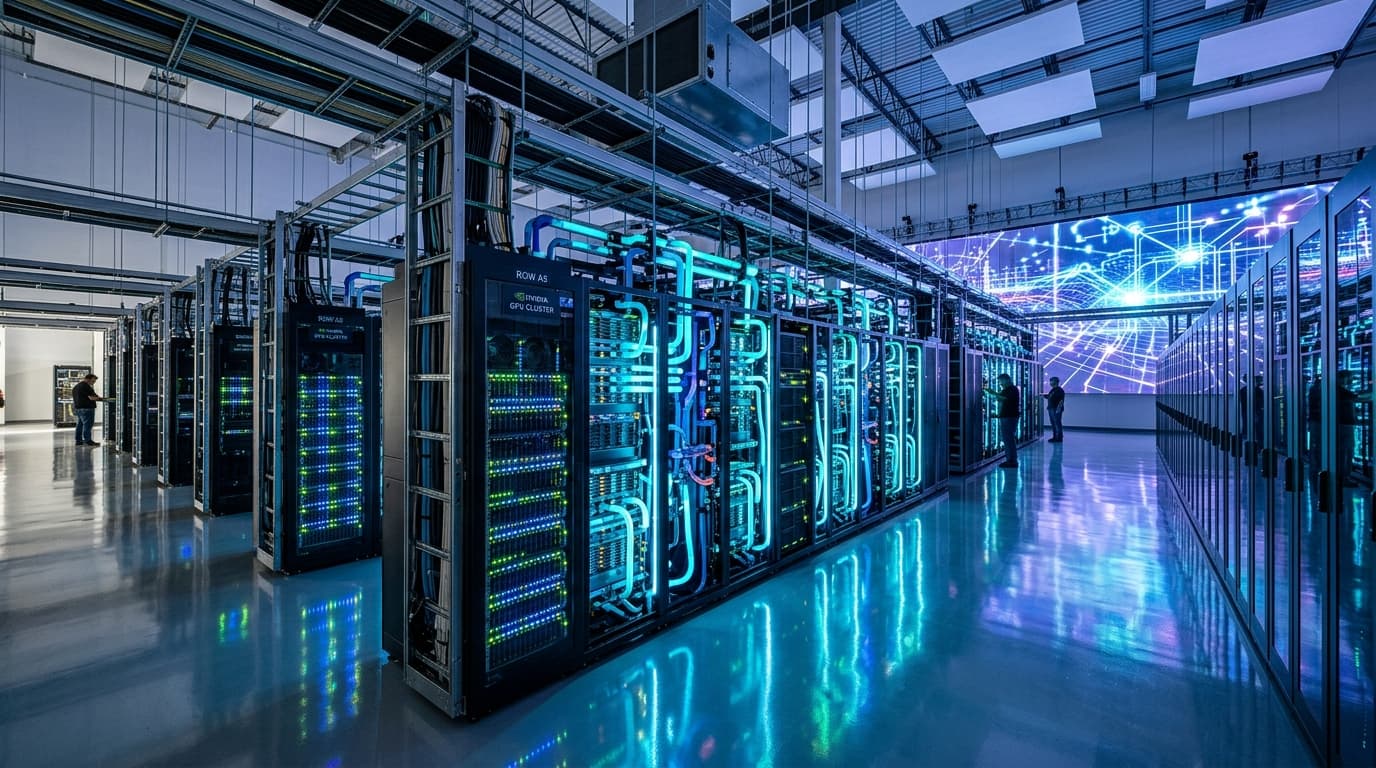
Data Center Electricity Consumption in 2026: How Significantly Is AI Driving Growth?
An empirical breakdown of 2026 data center power demand: AI cluster surges, IEA and Gartner forecasts, rack power density, and transmission bottlenecks.

Evolution of Digital Entertainment Portals & Modern JKT88 System
Comprehensive analysis of digital entertainment portal evolution in the JKT88 ecosystem, highlighting system architecture and online user experience.
Zero Trust Implementation for the Protection of Digital Public Service Infrastructure
A security architecture study of digital public services based on Zero Trust Architecture, NIST identity management integration, and advanced transport encryption.