Data Center Electricity Consumption in 2026: How Significantly Is AI Driving Growth?
An empirical breakdown of 2026 data center power demand: AI cluster surges, IEA and Gartner forecasts, rack power density, and transmission bottlenecks.
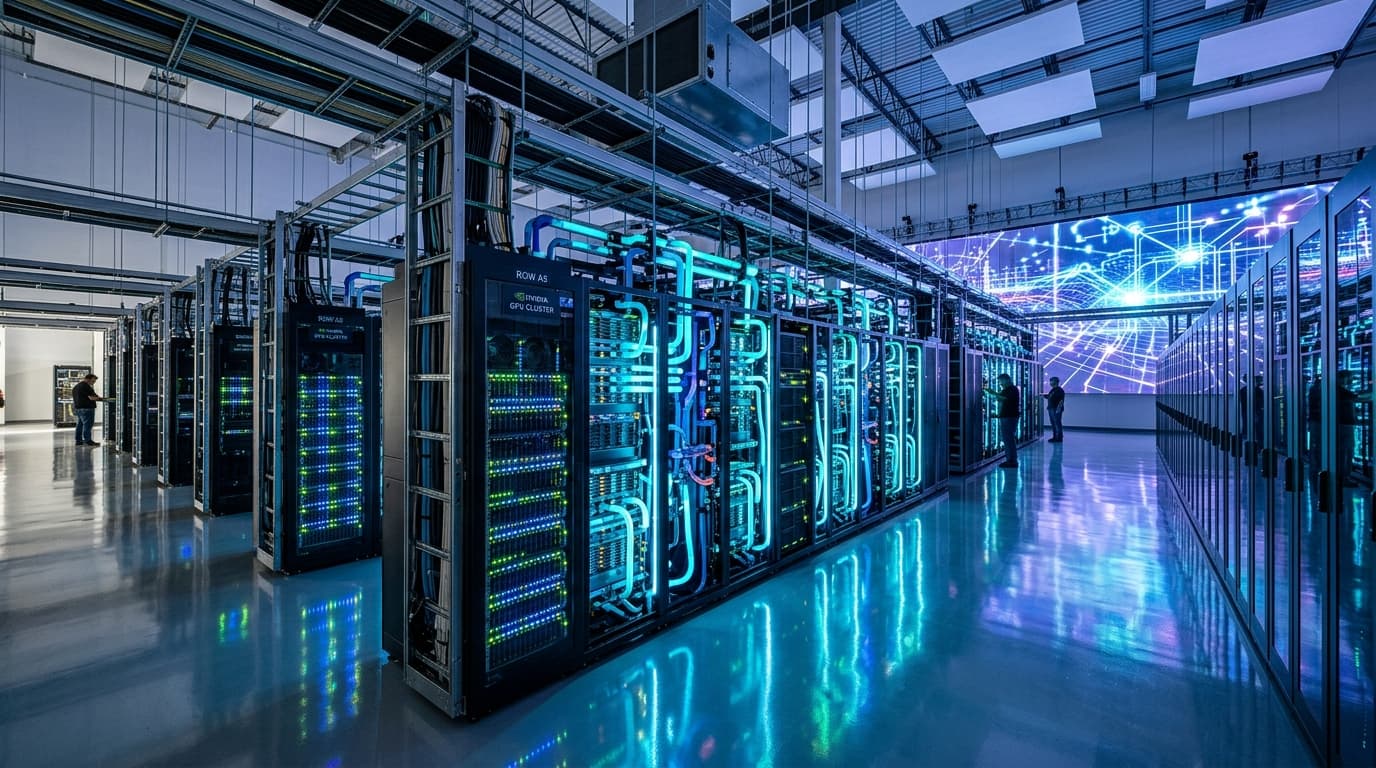
AI servers are projected to consume 175 TWh, or roughly 31% of the 565 TWh global data center electricity demand in 2026, according to Gartner. Despite rapid efficiency gains per algorithmic query, rack power densities have surged up to 11-fold, making AI the fastest accelerator of enterprise power demand worldwide.
Behind the public fascination with artificial intelligence, from photorealistic video generators to autonomous coding systems, lies a substantial physical reality. Thousands of compute clusters operate continuously in specialized facilities, consuming electrical energy on an unprecedented scale.
Modern data centers are no longer passive web hosting environments or enterprise backup vaults. They have evolved into large-scale computational production facilities. Official findings from the International Energy Agency (IEA) estimate that global data center electricity consumption will reach approximately 485 TWh in 2025, and could climb toward 950 TWh by 2030 under baseline scenarios. This trajectory indicates that global digital power demand may nearly double within five years.
The central question remains: how much of this electrical expansion is specifically driven by artificial intelligence workloads?
Deconstructing the Load: AI Is Not the Only Consumer
Before concluding that artificial intelligence consumes the entirety of digital power, we must examine the distribution of electricity across modern facilities objectively. Data centers allocate power across three primary categories:
- Conventional Enterprise Compute: Powering core internet infrastructure, such as banking databases, enterprise software, streaming delivery, and foundational cloud services at Internet & Cloud Infrastructure.
- AI-Optimized Accelerated Compute: High-density GPU and NPU clusters dedicated to training foundational models and executing millions of inference requests per second.
- Cooling and Facility Infrastructure: Chilled-water loops, precision air handlers, uninterruptible power supplies (UPS), and electrical distribution gear.
Conventional digital workloads currently account for the largest share of overall consumption. However, the difference in growth velocity is striking: conventional workloads grow at a steady, incremental pace, while AI compute demand expands at an aggressive rate.
Global Projections: IEA and Gartner Benchmarks
Two authoritative research bodies in the digital and energy sectors, the IEA and Gartner, provide quantitative benchmarks outlining this transition.
1. Long-Term Trajectory from the IEA (2024–2030)
IEA telemetry places global data center power consumption at 415 TWh in 2024, rising to 485 TWh in 2025, and projecting to reach 950 TWh by 2030.
Calculating the projected expansion rate between 2025 and 2030:
Projected Demand Growth:
(950 TWh - 485 TWh) ÷ 485 TWh × 100% = +95.9% (representing a near doubling of global data center power consumption over five years).
The 950 TWh figure represents an assumed baseline scenario model rather than an absolute historical certainty. Nevertheless, the trajectory illustrates a clear expansion trend for regional electrical planners.
2. Infrastructure Breakdown from Gartner (2025–2027)
Research from Gartner Research isolates consumption across specific facility components:
| Infrastructure Category | 2025 (TWh) | 2026 (TWh) | 2027 (TWh) | Growth Trajectory |
|---|---|---|---|---|
| Conventional Servers | 193 | 195 | 200 | Steady (+3.6%) |
| AI-Optimized Compute | 95 | 175 | 258 | Exponential (+171.5%) |
| Cooling & Facility Support | 159 | 195 | 243 | Increasing (+52.8%) |
| Total Global Demand | 447 | 565 | 702 | High Acceleration (+57%) |
Data source: Gartner Research forecasts (2026). Percentage derivations calculated by the editorial team at InspirasiKita Digital.
How Dominant Are AI Servers in 2026?
Examining Gartner's figures for 2026: out of a total projected 565 TWh of global data center power consumption, AI-optimized servers will consume 175 TWh.
Calculating the proportional share:
AI Workload Share Ratio (2026):
175 TWh ÷ 565 TWh × 100% = 30.97% (rounded to ~31% of worldwide data center electricity demand).
This benchmark leads to two key conclusions:
- First: AI does not yet represent the majority of facility power. Roughly 69% of electricity remains allocated to conventional enterprise servers and supporting infrastructure.
- Second: AI compute expansion is exceptionally rapid. AI server power consumption increases by 84.2% within a single year (from 95 TWh in 2025 to 175 TWh in 2026), compared to only 1.03% growth in conventional servers.
Gartner forecasts that by 2027, AI server consumption will reach 258 TWh, officially surpassing conventional server demand (200 TWh) for the first time in computing history.
Rack Power Density: The Primary Technical Bottleneck
For electrical engineers and facility operators, the fundamental challenge is managing rack power density per square meter rather than simply expanding building floor space.
- Conventional Server Racks: Typically operate between 5 kW to 15 kW per enclosure.
- Modern AI GPU Enclosures: High-density accelerator racks can require between 40 kW and 120 kW per rack.
To put this in context, the IEA notes that the peak electrical demand of a single advanced AI server rack in 2027 can equal the power consumption of dozens of households combined.
Concentrating this magnitude of power within a standard two-square-meter footprint generates intense thermal heat. Traditional air-cooling systems are no longer sufficient to maintain safe operating temperatures. Consequently, modern facilities are adopting direct-to-chip liquid cooling and immersion architectures.
The Efficiency Paradox: Why Cheaper Queries Drive Higher Consumption
Algorithmic efficiency continues to advance rapidly. Through model quantization, knowledge distillation, and optimized accelerator silicon, the energy required to execute a single prompt has decreased significantly.
However, lower energy consumption per task does not automatically reduce aggregate power demand. This behavior reflects Jevons Paradox:
As technological efficiency increases and operating cost falls, aggregate demand rises substantially, leading to higher overall resource consumption.
As the marginal cost of compute falls, AI adoption expands into complex, high-frequency use cases:
- Extended high-resolution video generation.
- Multi-step autonomous reasoning chains.
- Persistent autonomous agents operating 24 hours a day with zero human oversight.
Efficiency gains per query are outpaced by the exponential growth in total query volume.
Grid Transmission Constraints as Growth Limits
Data center expansion across multiple regions is increasingly constrained by local electrical grid capacity, particularly substations and high-voltage transmission lines.
Data from the Lawrence Berkeley National Laboratory (LBNL) indicates that US data centers consumed approximately 176 TWh in 2023, representing 4.4% of total US electrical demand. This figure is projected to reach between 325 and 580 TWh by 2028.
Regional Dynamics in Southeast Asia
A similar expansion is underway across Southeast Asia. The corridor spanning Singapore, southern Johor in Malaysia, and Batam has become a key hub for regional cloud infrastructure investment.
The IEA projects that data center electricity demand across Southeast Asia will more than double by 2030. This expansion brings critical considerations:
- Constructing regional power generation facilities and high-voltage transmission corridors requires multi-year planning and delivery cycles.
- Facility cooling water requirements demand careful planning to protect local municipal supplies.
- Approximately 20% of planned data center capacity globally faces potential commissioning delays due to interconnection queues with primary electrical grids.
Conclusion
Artificial intelligence does not account for the entirety of data center electricity in 2026, but it represents the most significant driver of incremental demand.
With AI accounting for roughly one-third of total facility power this year and projected to surpass conventional compute by 2027, the future of digital expansion depends directly on clean energy availability, grid transmission resilience, and effective cooling innovations.
Primary References
- International Energy Agency (IEA). Energy and AI Report, 2025–2026. iea.org
- Gartner Inc. Forecast Analysis: Data Center Electricity Demand Growth, 2026. gartner.com
- Lawrence Berkeley National Laboratory (LBNL). United States Data Center Energy Usage Report, 2024. datacenters.lbl.gov
- U.S. Department of Energy. Evaluating Electricity Demand Trajectory from Digital Infrastructure.
Frequently Asked Questions (FAQ)
Verified technical clarification for readers and search clarity.
According to Gartner projections, total worldwide data center power consumption is estimated to reach 565 TWh in 2026, representing a 26% annual increase from 2025.
Topics & Related Industries:
More on Internet & Cloud
Deep dives into system architectures, enterprise workloads, and modern benchmarks.
AI Data Center Expansion in Indonesia 2026: PUE Efficiency Standards, Green Energy Supply, and Network Resilience
A research-based analysis of the acceleration of AI data center development in Indonesia, PUE efficiency targets below 1.3, renewable energy integration, and data transmission infrastructure readiness.

Evolution of Digital Entertainment Portals & Modern JKT88 System
Comprehensive analysis of digital entertainment portal evolution in the JKT88 ecosystem, highlighting system architecture and online user experience.
Zero Trust Implementation for the Protection of Digital Public Service Infrastructure
A security architecture study of digital public services based on Zero Trust Architecture, NIST identity management integration, and advanced transport encryption.